

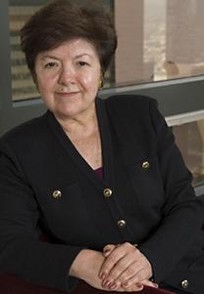
 Vilma Martinez
Women like Jovita Idár and Adelina Otero-Warren, two Hispanic American suffragists the God’s Diversity Committee honored last month, influenced the next generation of women who came of age enjoying the benefits of the labors and sacrifices of these earlier trailblazers. One such woman we wish to honor this week is Vilma Martinez, a Mexican American civil rights lawyer, leader and diplomat.
Vilma Martinez was born in 1943 in San Antonio, Texas, to Mexican-American parents. Although Marinez was only three years old when Jovita Idár died, Vilma would come to learn of her predecessor’s work and follow in her footsteps, to push barriers and fight for equal rights from the many women Idár influenced.
Vilma Marinez received a bachelor’s degree from the University of Texas at Austin, and in 1967, graduated with a law degree from Columbia University Law School. In interviews, she has recounted times when she was advised to give up her dreams of studying law and, later, not to get her hopes up about becoming a litigator. But she ignored these comments, went to law school and began her legal career as a litigator for the NAACP Legal Defense and Educational Fund. At age 29, she became the president of the Mexican American Legal Defense and Educational Fund (MALDEF) in Washington, D.C.
But far more impressive than her determination, is the actual work she did during her career as a litigator. She was part of the legal team involved in a landmark Supreme Court case (Griggs v. Duke Power Co.) that strengthened protections against discriminatory employment practices. In 1975, under her leadership, MALDEF succeeded in its lobbying efforts to have Congress extend the protections of the 1965 Voting Rights Act to Mexican Americans and other minority groups. This included challenging discriminatory election practices that limited Latino political representation and the protection of language minorities by including bilingual voting materials in voting information distributed to the public. She also championed women’s rights in her leadership role of MALDEF. In 1974, MALDEF created the Chicana Rights Project which addressed discrimination against Mexican American women in employment, education, health care, credit and housing. She was part of the legal team that won the right to a bilingual education for non-English speaking children in New Mexico. Of major significance was MALDEF’s successful challenge to the Texas Policy that denied public education to children of undocumented immigrants. These efforts culminated in 1982, when the U.S. Supreme Court ruled that states could not deny these children access to a public education.
Martinez served as a University of California regent, and later, as U.S. Ambassador to Argentina from 2009-2013. Martinez’s legacy was to use the law to safeguard racial, gender, educational equality and to expand the opportunities and legal protections for historically underrepresented communities. This is the work that Jovita Idhár and Otero-Warren and many others began and fought for and continues today, unabated through a new cohort of brave women, including Vilma Martinez, and their allies.
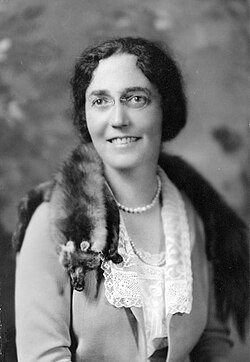 Adelina Otero-Warren
As we continue our recognition of Latina and Hispanic suffragists, the members of the God’s Diversity Committee wish to honor Adelina Otero-Warren (1881-1965) who tirelessly lobbied legislators in New Mexico to approve the Nineteenth Amendment.
Born into a wealthy and politically prominent Hispanic family with deep roots in New Mexico, Otero-Warren continued her family’s long-established commitment to improving life in her community. While she used her many talents to advance social justice causes as a suffragist, educator, politician, author and businesswoman, her primary focus was always to protect her Hispanic community’s political voice, improve educational and economic opportunities, enhance public health and preserve cultural traditions.
After her father’s untimely death when Adelina was two years old, her mother chose to raise her three children in a close-knit extended family surrounded by relatives and emersed in Spanish traditions. Her mother was also an activist committed to social justice reforms and educational opportunities in the Hispanic community and her political advocacy greatly influenced her children. The family’s civic engagement continued unabated even after her mother’s marriage to an English businessman who had migrated to New Mexico. As their new family grew (they had nine children together), they encouraged cross-cultural influences and merged their political and economic agendas. This environment combined with Adelina’s education at a private, progressive Catholic boarding school, helped further develop her social consciousness and nurture her appreciation of the work women could do as community leaders and teachers.
After a brief unsuccessful marriage, Adelina launched an independent life committed to important civic causes. Beginning in 1910, she became deeply involved in the fight for women’s voting rights and in 1916 became vice-chair of New Mexico’s branch of the Congressional Union for Woman Suffrage, a national organization under the leadership of Alice Paul. During her tenure, she realized that the suffrage movement needed to attract New Mexico’s large Spanish-speaking population. When the leadership of this branch became open and Alice Paul asked her to become its chair, Otero-Warren agreed on condition that all suffrage literature and campaign materials be published in both Spanish and English in the hopes that this would bring Hispanic women into the movement.
Her political skills were especially important in securing New Mexico’s support for the 19th Amendment. Because New Mexico’s constitution made changing voting laws very difficult, advocates for suffrage devoted much time and skill to persuading state legislators to vote to adopt this amendment. Using her political connections and natural leadership skills, she lobbied lawmakers, and built support for ratification. On February 21, 1920, New Mexico ratified the 19th Amendment making it the 32nd state to do so.
In addition to her work in the suffrage movement, Otero-Warren was an advocate for adult education and for bilingual and bicultural education for children as well. She also worked to improve education for Native American students. Her successful efforts to preserve the cultural and family connections of indigenous children was in sharp contrast to the philosophy of the Indian residential schools that had done great damage to the youth in its care for generations. She became the first female superintendent of public schools in Santa Fe and served in that role for 12 years. In 1922, she became the first Hispanic woman to run for the U.S. Congress and although she did not win that election, she remained politically active and never ceased working to improve public life and educational opportunities for traditionally underserved communities.
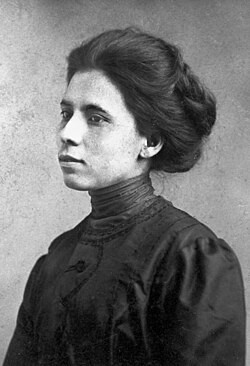 Jovita A. Idár
Earlier this year, the members of the God’s Diversity Committee celebrated the lesser-known women of the suffrage movement. During Hispanic Heritage month (September 15 – October 15), it is fitting to continue this recognition by focusing on the Hispanic and Latina women who dedicated their energies and often their life’s work to this and other important social justice concerns.
Today, we wish to recognize Jovita A. Idár (1885-1946), a Mexican American journalist, teacher, and civil rights activist. Jovita was born in Laredo, Texas, one of eight children. Her parents who were relatively prosperous and civic-minded, had emigrated from Mexico to flee a dictatorial government, a dearth of economic opportunities, and much violence.
When Jovita was a teenager, her father, Necasio, became the successful publisher of a newspaper, La Crónica, the first of several publications the family would own. Although the Idár family had a secure and financially comfortable life, Texas was not an easy place for the majority of Mexican immigrants. Mexican children were taught in segregated and poorly funded schools. Many shops refused to serve those of Mexican descent and Mexican men were sometimes lynched.
Jovita began her professional life as a teacher but soon grew frustrated with the unequal conditions for Mexican children, and in 1910, she left teaching and joined the staff of her father’s newspaper. The Idárs were not just journalists but activists as well, and Jovita embraced her family’s commitment to social change. Jovita’s writings were especially bold and critical of federal and state leadership and policies that she deemed to be unjust. This often attracted unwelcome attention. Once, after the paper published an article critical of President Woodrow Wilson, the local police raided the newspaper office. While Jovita was able to bravely turn them away this first time, they returned late one night and destroyed the newspaper office and its equipment. This merely prompted Jovita and several of her brothers to start another newspaper, equipped with a new printing press and a relocated staff.
Throughout her life, Jovita wrote forcefully for the need for improved education for Mexican children, voting rights for all women and in places where white women could vote, for the repeal of literacy tests, poll taxes and other exclusionary practices applicable to women of color. In 1911, writing under the pen name, Astrea, the Greek goddess of justice, Jovita published an article in favor of women’s suffrage which inspired other Laina women in the United States to join the cause. That same year, Jovita helped found the League of Mexican Women, a very early, if not the first, Mexican American feminist organization. This group was an offshoot of a larger organization founded by her family, El Primer Congreso Mexicanista, a group of activists concerned with issues facing the Mexican American community in Texas.
After Jovita married in 1917, she and her husband, Barolo Juárez, moved to San Antonia, where Jovita became active in the Democratic Party and a precinct judge in the running of local elections. She also established a free kindergarten, worked as a translator for Spanish speaking patients at a county hospital and became an editor of a Christian publication of the Methodist Church. Over the years, she continued to write articles advocating for better schools, more economic opportunities, fairer treatment for Mexican Americans and for women’s rights.
A prayer for Hispanic Heritage Month
O God, who created all peoples I your image: We thank you for the diversity of races and cultures in this world. We praise you for the gifts of the Hispanic and Latino Community – for the beauty of their art, the joy of their song, the strength of their families, and the rich witness of their faith. Show us your presence in you Hispanic brothers and sisters, and enrich our lives with their fellowship. Keep them in your care, makes us fierce advocates and allies for welcome and inclusion, and help us work together for the common good; through Jesus Christ our Lord. Amen.
-Adapted for use in Episcopal Communities.